SLIDE PROGRAMS
Teacher / Booking Info
Images of the World
Volcanoes of the World
slide program

Erupting volcanoes, extinct volcanoes,
lava, volcanic rock --this student favorite is updated yearly.

We explore interesting countries and cultures, and see a variety of animals in route to volcanoes in
Africa
Asia
United States
Mexico
Central America

South America

Learn how volcanic activity
shapes the earth
.
Volcanoes of the World contains pictures and stories from 12 different adventures covering more than 27 years of travel. We even include a trip through Africa that Bruce did before he met Tass.
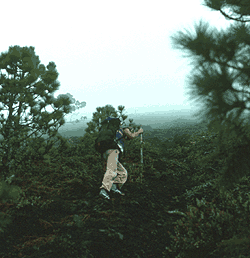
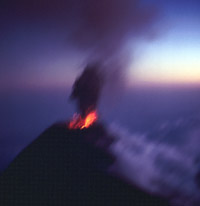
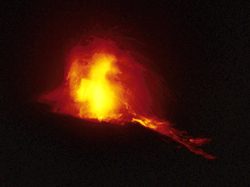
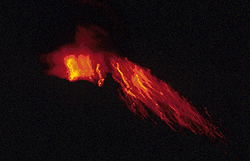
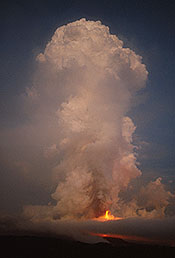
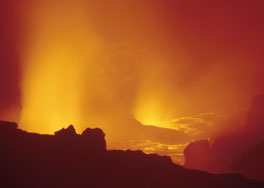
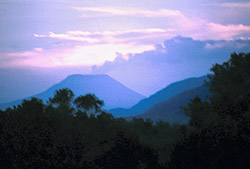
The photos above and to the left are of Nyiragongo Volcano in Congo, Africa, which just began a new series of big eruptions January 18, 2002.

To see more photos from Bruce's first trip to Africa, and read about Bruce's climb to the top of Nyiragongo, click on African Great Rift Valley.

After Bruce returned from Africa, and Tass came back from South America, we met as ski bums in Jackson Hole, Wyoming.

Our first trip together is a six-month journey through Mexico and Guatemala. To see what we look like when we start this trip, along with our tipi in Jackson, click on About Bruce and Tass.

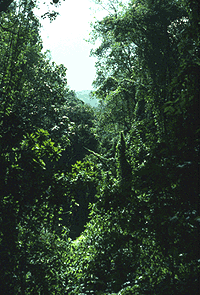
We begin in the rainforests of Chiapas state in southern Mexico.

Tass is an already an avid birder after traveling in South America. Now she teaches Bruce. We spend days hiking rainforest trails, watching birds, and studying our bird books.

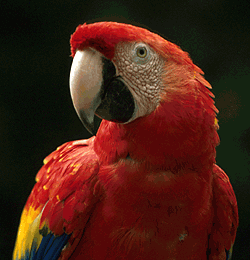
The scarlet macaw is one of the world's largest parrots, almost four feet long including its beautiful tail. Macaws are loud, raucous birds who love to squawk at one another. Like most parrots, macaws usually mate for life.
READ
ABOUT
IT!

Our first sighting of a trogon in the rainforest.

page 13
begin paragraph 5

Our most exciting trogon sighting.

page 80
begin paragraph 4

of our book

ANDES TO THE AMAZON

We spend six weeks on Isla Mujeres, a small island off the Yucatan coast of Mexico. The second largest barrier reef system in the world begins here in Mexico and extends south past Belize to Honduras.

We snorkel constantly. Between dives we lay on the beach studying our ocean fieldguides, learning about the different varieties of colorful coral and beautiful tropical fish. We excitedly check off each new species, noting the date and location of every sighting.

To see a school of tropical fish underwater,
click on snorkeling in the Caribbean.

Besides birding and learning about the ocean, we want to learn about the Mayan Indians.

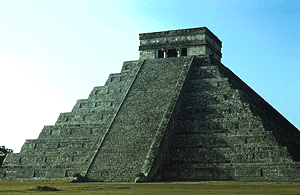
The Mayans built huge cities and pyramids throughout Mexico and Central America. This pyramid in Chichen Itza is in the northern part of the Yucatan peninsula. The classic period of the Mayan civilization lasted from 250 AD to 900 AD Most of the ancient Mayan cities were abandoned over a thousand years ago.

More information about the Maya will soon be on our Rainforests and Mayan Ruins pages.

We travel into the highlands of western Guatemala to visit the Maya of today.

Mayan women are famous for their beautiful weavings.

The handmade blouses these women are wearing are called huipils (pronounced wa-peels). Many huipils are nearly as thick as a rug, and might take months to weave.

We stay on the shores of Lake Atitlan, which are surrounded by mountains and volcanoes.

As the sun sets behind the mountains we plan which of the volcanoes we will climb first.

The base of the Atitlan volcano is covered with thick tropical rainforest. You can just see the top of the volcano between the trees on the left.
READ
ABOUT
IT!

How we make a "sauna" and find a warm place to sleep on top of Atitlan volcano.

page 50
begin paragraph 3

of our book

ANDES TO THE AMAZON

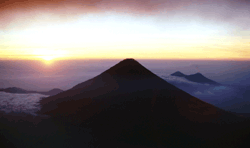
During most of the climb we are in thick mist and pouring rain. As we reach the summit the clouds clear. We find ourselves surrounded by volcanoes.

What a great place to spend the night!

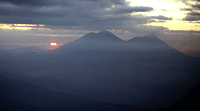
The next morning as we watch the sunrise we decide we want a closer view of Fuego, the active volcano above on the right.

We don't know if Fuego is safe to climb, so we decide to climb Acatenango, the volcano above on the left with two cones. From the top of the highest cone we hope to have a better view of Fuego.

After two days of climbing we arrive on top of Acatenango.

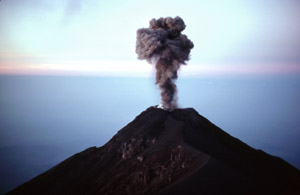
The view of Fuego is even better than we had hoped.

We take off our backpacks and sit down to watch. About every twenty minutes the ground shakes and we see a huge puff of smoke rise out of the volcano. Only as the plume of ash begins to billow does the sound of the explosion reach us.

As the sun goes down we realize that each explosion is accompanied by a large shower of lava and hot rock that we could not see in the bright daylight.

We know we are in for a beautiful show during the night!

READ
ABOUT
IT!

Climbing Acatenango volcano and why we think the volcano we are on is starting to erupt.

page 51
begin paragraph 6

of our book

ANDES TO THE AMAZON

February 16, 2002

Fuego volcano in Guatemala erupts with a 2,000-foot flow of lava.

Fuego, which means fire in Spanish, continues to put on a dramatic show, erupting every twenty or thirty minutes all through the night.

We wrap our sleeping bags around us to stay warm, and sit up all night long, watching the volcano.

We climbed Acatenango with enough food for three days.

We are so excited watching Fuego that we stay on the volcano four days. The last day all we have to eat is one banana and one avocado.

As we sit watching Fuego on our last night we wonder, where will we go next to see more of the worlds volcanoes?

One of our favorite volcano sighting is during our World Bicycle Tour when we visit the island of Hawaii.

From the moment we see this eruption, we are determined to get a closer look!

If you want to join us, click on Kilauea in Volcanoes National Park on the big island of Hawaii.

Many more photos
and stories,
coming soon!

ALL PHOTOGRAPHS COPYRIGHT IMAGES OF THE WORLD

Home
What's New
Q & A
Books
Photo Gallery
Gear Info
World Bicycle Tour
Rainforests &
Mayan Ruins
Volcanoes of
the World
Andes to
the Amazon
African Safari
Life Journeys
Tour Dates & Fees
Teacher Guide