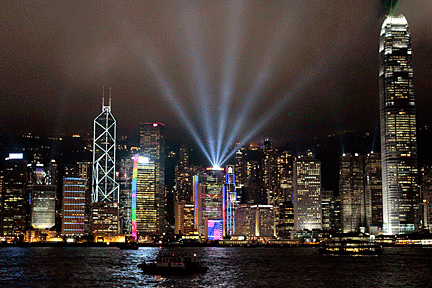
After a furious five days of packing and a 22-hour flight we arrived in Hong Kong May 3 with our bicycles intact. Staying at the YWCA. Got a “cheap” room for $70 per night.
Hong Kong is super pedestrian friendly. Everybody gets around using the subway, buses, electric trams, and taxis, with lots of walking in between. Very few overweight people.
Tass’s cousin John grew up in Hong Kong and speaks Cantonese. He has been an excellent tour guide and has really given us a royal tour of the city. This has been a fun way to start our trip. Everyone is friendly and helpful and we have been surprised at the number of people who can speak at least a little English.
Shopping and eating are the major activities here. There are humongous billboards and signs everywhere promoting all the latest products. Walking down each street is a sensory overload. Yesterday we rode the worlds longest series of escalators, which runs nearly a half-mile up a hillside covered with towering residential apartments.
Today we take a 22-hour train ride to Guizhou province, where we will begin bicycling through the rural highlands in an area known for its minority cultures. |
|
A Brief History of Hong Kong
Hong Kong was an obscure part of China until the British moved into the area in the 1750s. The British imported tea from China, but found it difficult to sell products to China, which created a huge trade imbalance.
The British began encouraging Chinese citizens to buy opium (which the British could get cheaply in India, one of their 13 colonies) as a way of balancing the flow of trade in their favor.
Alarmed by the widespread use of opium, or “Foreign Mud,” the Chinese government began destroying the opium warehoused in Guangzhou, across the straits from Hong Kong.
The British used the destruction of the opium as an excuse to take control of Hong Kong in 1842 during the Opium Wars. By 1907 Hong Kong had enough economic power to abandon the drug trade for more legitimate businesses.
The British ceded control on Hong Kong back to China in 1997, with the stipulation that Hong Kong would retain many of its own laws until 2047, under the “One country, Two Systems” form of government. Today Hong Kong has the world’s 6th highest GDP in relation to the size of its population of seven million people. |